19
May 2026
A look back at the ISTO Africa webinar: The role of traditional custodians at the heart of socially sustainable tourism in Africa.
This webinar marks the first official project of the Africa Section, which has been working on this initiative since the end of 2025 with particular dynamism and strong commitment. This year also marks an important milestone for the section, which now has its own dedicated budget, thereby strengthening its capacity for action and development.
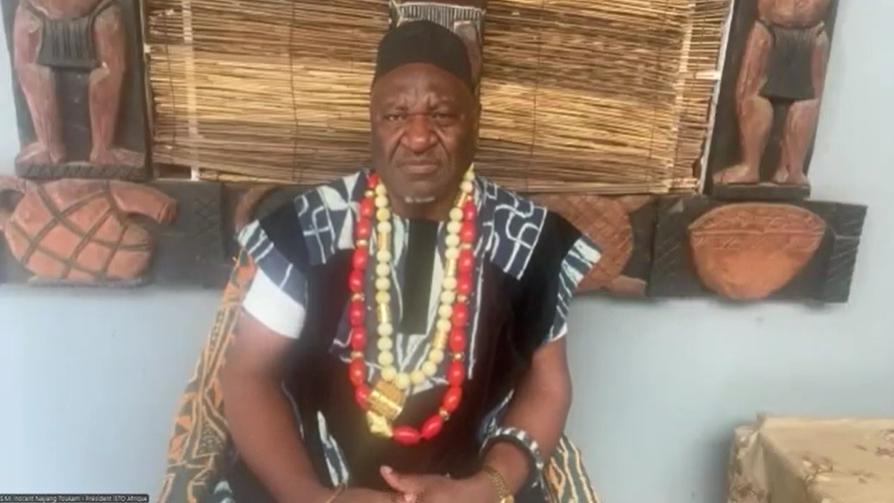
H.M. Inocent Nayang Toukam, King of the Batoufam, President of the ISTO Africa Section and President of BCT (Cameroon), opened the webinar by welcoming the participants and speakers. He then took the floor alongside three other speakers during the webinar:
- Mr Ousmane Dokala Kouyaté – Griot from the prominent Kouyaté family of Niagassola (Guinea-Mali),
- Mr Lamine Diawara – Mandinka Griot from Casamance (Senegal),
- Dr Aliou Gaye – PhD in Tourism and Heritage, lecturer and researcher at Iba Der Thiam University in Thiès (Senegal)
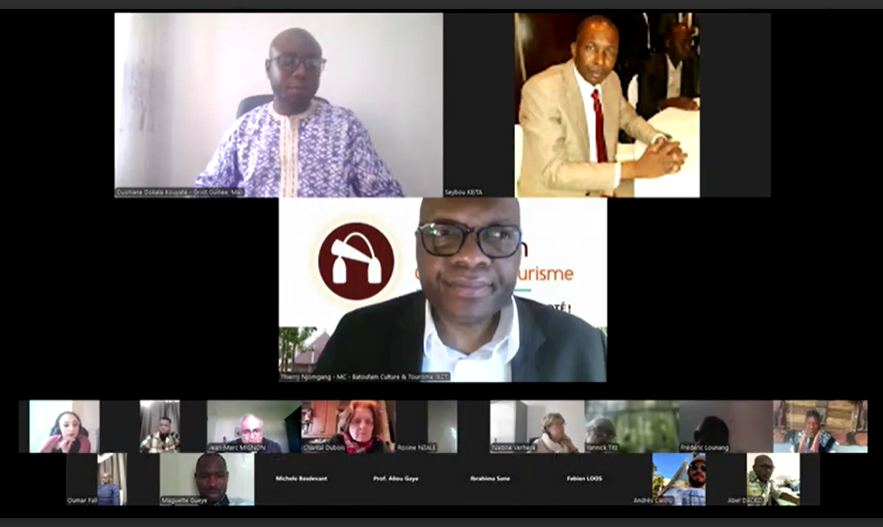
As master of ceremonies for the webinar, Mr Thierry Njomgang, Technical Adviser to the President of BCT, was responsible for facilitating the event alongside Mr Seybou Keita – journalist and communications specialist, member of Rematourd in Mali. Thanks were extended to the entire ISTO team, in particular to the Secretary General, Y. Godin, the presidents of the regional sections and the Honorary President, J.-M. Mignon, who was among the webinar’s guests of honour.
Rethinking tourism governance based on local cultures

This webinar was part of a broader discussion on the social sustainability of tourism. A strong conviction emerged from the discussions: tourism development cannot be sustainable if it remains disconnected from the cultural realities of the region.
Discussions focused in particular on the role of traditional leaders in preserving social cohesion, but also on how they contribute to welcoming and guiding visitors. This approach is not limited to the traveller’s experience, but is part of a collective and community-based dynamic.
A dialogue between tradition and academic expertise
The webinar brought together a diverse range of participants, enabling a cross-fertilisation of approaches and experiences. H.M. Inocent Nayang Toukam, King of the Batoufam and President of ISTO Afrique, shed light on the role of traditional authorities in the governance and stability of local communities.
The contributions from Ousmane Dokala Kouyaté and Lamine Diawara highlighted the richness of oral tradition and its role in transmitting values and history. For his part, Dr Aliou Gaye, a lecturer and researcher, offered a more academic analysis of the links between tourism, heritage and public policy.
A forum for dialogue towards more inclusive tourism
The session continued with a discussion with participants, allowing for deeper reflection and the sharing of experiences from different contexts. These discussions highlighted the need to better integrate traditional stakeholders into tourism strategies and to recognise their role in building sustainable tourism.

Zoé Bertolin
19-05-2026