Inclusion of people with disabilities in community tourism: concrete experiences in Europe and Mexico
10 Sep 2025

Inclusion of people with disabilities in community tourism: concrete experiences in Europe and Mexico.

On 17 July 2025, the International Social Tourism Organisation's working group on Community and Fair Tourism organised a round table discussion on a key issue: how can communities prepare to offer a dignified, accessible and enriching tourism experience to people with disabilities?

In the context of community tourism, the inclusion of persons with disabilities remains a major challenge, but also an opportunity to strengthen social cohesion and local engagement. Three speakers from Spain and Mexico shared projects, practices and reflections that shed light on this path.

Miriam Adame: Miriam holds a bachelor's degree in hospitality and tourism and a master's degree in advertising and strategic marketing, with 20 years of experience in the tourism sector. She has worked in the hotel industry, coordinated the development of the Guanajuato State Tourism Observatory and worked on the creation of the state's tourism sustainability model. She currently assists various organisations with data generation and analysis, strategic planning and sustainability in tourism, and collaborates as a lecturer at ENES UNAM León on inclusion and accessibility, as well as tourism policy and planning.

Adriana Islas: Head of the Tourism and Sustainable Development degree programme at UNAM ENES León, she has 23 years of experience in the tourism sector, where she has held key positions in academia, private enterprise and government, both nationally and internationally. She holds a Master's degree in Human and Organisational Development and a degree in Tourism Business Administration. She is a member of the technical group of the Guanajuato State Tourism Observatory, the UN Tourism International Network of Sustainable Tourism Observatories, and the Mexican Academy of Tourism Research.

Adriana Hurtado: Graduate in law and business administration, with a master's degree in tourism management and a doctorate in human sciences. She has been working as a project coordinator at KOAN Consulting for over 5 years and has extensive experience in managing European initiatives that promote sustainable tourism, accessibility and regional development. She combines this work with academic and scientific activities as a teacher and researcher in the field of tourism, cultural heritage and sustainability.


Lessons from the European DIANA programme: tools for involving local communities and making nature accessible
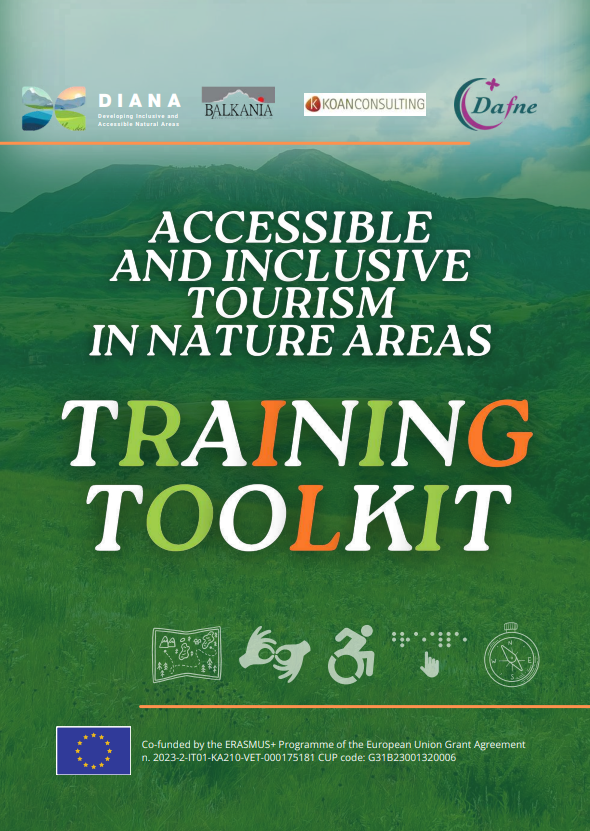
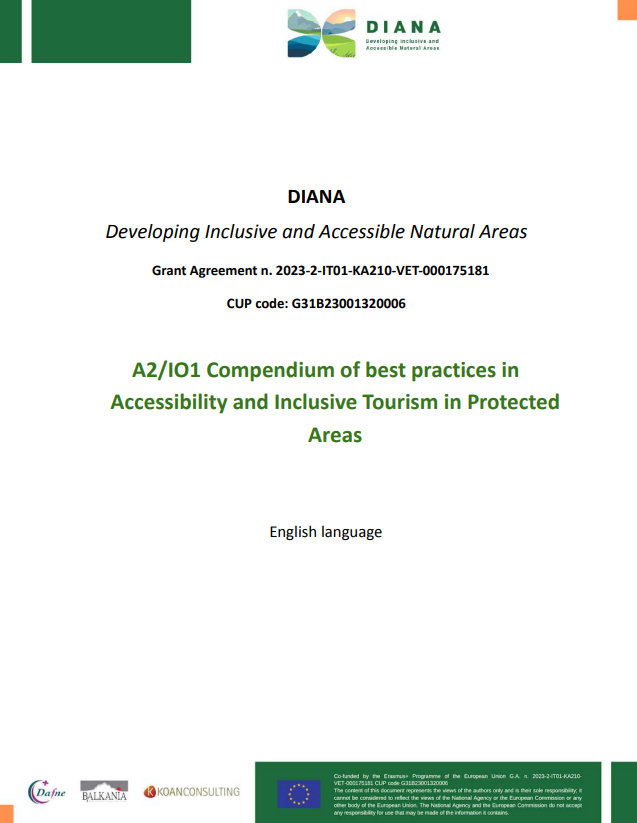
Adriana Hurtado, from KOAN Consulting (Spain), presented the European DIANA project — Developing Inclusive and Accessible Natural Areas, an Erasmus+ initiative coordinated by the Italian cooperative D.A.F.N.E., with the participation of KOAN and the ABAT Balkania association (North Macedonia).

DIANA was born in the wake of the pandemic, which revealed both the vital importance of nature for humans... and the inequalities of access for people with disabilities. ‘Many were unable to enjoy natural spaces due to a lack of facilities or awareness,’ Hurtado pointed out.

The project did not stop at improving infrastructure. It also sought to break down social, cultural and emotional barriers. ‘Working with nature means working with the community,’ she emphasised.

The European DIANA programme has resulted in three major achievements:

  • A compendium of good practices, collecting examples of accessible facilities in protected natural areas around the world.
  • A toolkit for nature guides, offering practical and theoretical advice on organising inclusive visits.
  • Training sessions, organised in Italy and Macedonia, combining online preparation and field exercises.


These resources are freely available online, and the closing event in Genoa in 2025 provided an opportunity to measure the human impact of the initiative. For some participants, it was their first time climbing a mountain. ‘Nature is experienced step by step, just like life,’ summed up one of them. The project also highlighted a strong conviction: inclusion cannot be reduced to a label or a checklist with boxes to tick, but rather a collective process that enriches the community.

In Mexico, inclusive tourism at the service of the community

Adriana Islas and Miriam Adame, from the National Autonomous University of Mexico (UNAM, León unit), presented another example of community collaboration around inclusion. Their work, carried out as part of the Bachelor's degree in Tourism and Sustainable Development, aims to change mindsets and train professionals capable of designing tourism that is both sustainable and inclusive.

This university programme is based on a cross-disciplinary and interdisciplinary approach. It brings together students, local communities, businesses and public authorities according to the ‘quadruple helix’ model. The aim is to learn to work with communities rather than for them, and to integrate accessibility into a broader approach to sustainability.

Students are encouraged to leave the classroom and engage with the reality of the local area. The example of Jalpa de Cánovas, a Pueblo Mágico recognised by UN Tourism as one of the ‘Best Tourism Villages’, illustrates this method well. In this village in Guanajuato, students and teachers carried out two main projects:

  1. Promoting inclusion and accessibility in tourism.
  2. Strengthening local identity through tourism products.


Why Jalpa de Cánovas? Because the community and local authorities have shown a genuine willingness to work together, facilitating the co-creation of projects.

The activities carried out aimed to go beyond a simple checklist of technical adjustments. ‘Accessibility is not just about ramps or sign language guides,’ insisted the speakers. It is also a question of perceptions, attitudes, communication and sensitivity.

The students took part in awareness-raising exercises – for example, visiting tourist sites blindfolded or with reduced mobility – to gain a practical understanding of the obstacles faced by people with disabilities. They also carried out technical visits to assess the existing infrastructure and interviewed local residents to find out their views on inclusion and identify their training needs. They identified specific areas for improvement: better signage, Braille materials, training for local service providers, and the creation of multilingual materials.

Shared lessons for more inclusive community tourism

Despite their different contexts, the two experiences revealed common findings on how to approach inclusion in community tourism.

  • Inclusion is a joint effort. It cannot be imposed from outside. It is built step by step, with the people concerned, involving the community in the process. The inhabitants themselves become drivers of change.
  • Accessibility goes beyond infrastructure. Of course, it is essential to develop physical spaces. But welcoming people with disabilities depends just as much on attitudes, awareness and the quality of human interaction.
  • Fairer tourism is beneficial for everyone. Older people and people with disabilities represent a significant and growing tourism market. Destinations that know how to welcome them in a meaningful way reap economic benefits while strengthening their social cohesion.
  • Small projects can have a big impact. These two experiences show that with strong local commitment and modest resources, it is possible to achieve significant results.

Towards truly inclusive community tourism

The round table also served as a reminder that inclusion is not limited to complying with legal standards. It is about creating genuine shared and meaningful experiences. As DIANA has shown, even a small project can trigger profound change: ‘If this was possible with this small project, what wouldn't be possible if all natural spaces were truly for everyone?’

On the Mexican side, the Jalpa de Cánovas experience demonstrates the value of collaboration between universities, communities, businesses and public authorities in ensuring that solutions are relevant, accepted and sustainable.

Welcoming tourists with disabilities is a shared responsibility that goes beyond technical considerations to touch on the very essence of community-based tourism: human interaction, participation and dignity. These European and Mexican experiences demonstrate that inclusion can become a driving force for strengthening social cohesion and enriching the tourism offer.

By involving local people, promoting local resources and adopting a holistic approach, it is possible to make accessibility a pillar of fair and sustainable community-based tourism.

To find out more about the projects:

The International Social Tourism Organisation's working group on community-based and fair tourism is led by Coralie Marti, director of the Association for Fair and Solidarity Tourism (ATES).

Article written by Coralie Marti (ATES)